
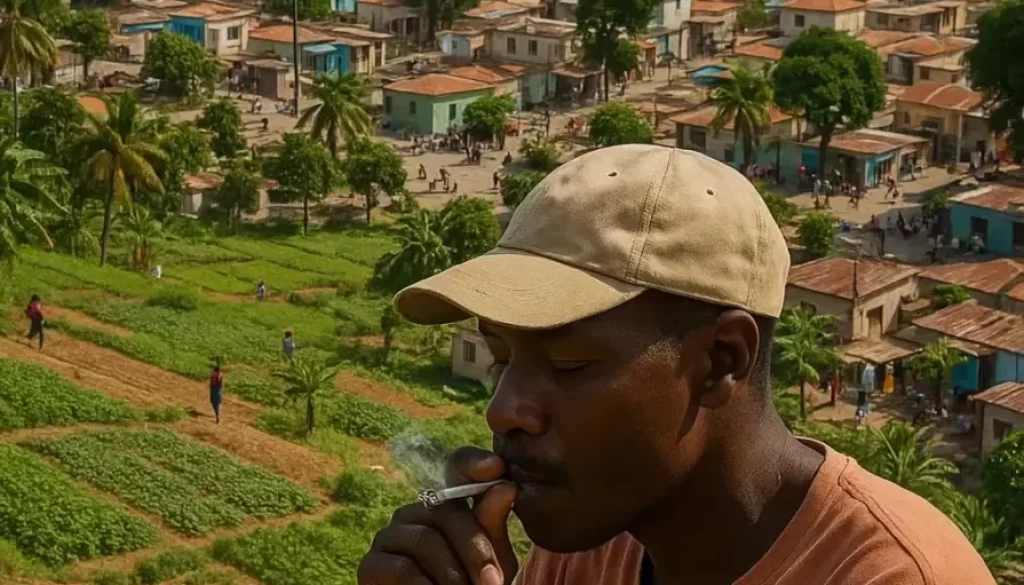
Cannabis and Culture: The Stigma of Cannabis Culture In Haiti
Recently, we had the chance to speak with Laury Lucien. Born in Haiti, she mentioned to me that she first experienced cannabis while growing up there. Her conversation reminded me of another conversation with Dr. Jean Talleyrand not too long ago. A Haitian-American, he spoke about Haiti and his hopes to one day see the country become a place where cannabis cultivation could reenergize the country’s economy.
As of right now, cannabis is persona non grata in Haiti. While the growth, sale, and use exist, it does so on the underground. Possession, sale, and trafficking of cannabis in the country could land you 10 years in prison.
While global attitudes around cannabis continue to shift, countries like Haiti remain firmly opposed to legalization, where the plant still carries heavy social and cultural stigma. In a country where religious influence runs deep, calls for cannabis reform remain rare and often met with resistance.
I wanted to learn more about how cannabis is viewed in the country, so CashColorCannabis contacted Onz Chery. Haitian-American writer and educator Onz Chery contributes to The Haitian Times. His work highlights social dynamics within Haiti and its diaspora. In the past, he has covered topics like the assassination of Jovenel Moise, the deadly earthquake in 2021, and the arrival of Haitian asylum seekers at the border in Del Rio, Texas.
Today, he gave us a small glimpse into the differences between how cannabis is treated in the States vs Haiti.
“In America, you could be a lawyer or athlete and say you smoke weed. But in Haiti, if they hear you smoke, they think you’re a gangster,” he shared. For many Haitians, cannabis use is seen as a sign of moral failure, with assumptions of criminal behavior and addiction attached. “People might assume you steal just to support your habit. That’s how serious the stigma is.”
Chery’s path into journalism began with a passion for soccer and sports writing. Over time, his focus expanded to broader societal issues. Three years ago, Onz penned a story about the country’s youth facing societal backlash and criminalization tied to cannabis use.
His reporting revealed that the stigma is especially harsh on Haitian youth, who are often caught in a cycle of judgment, lack of support, and even criminalization. “Seeing kids in uniforms getting arrested—it broke my heart,” he said to us via Zoom. “There are very few programs in Haiti to help people struggling with addiction. These kids are really on their own.”
Chery believes the roots of the stigma are complex. “Religion plays a huge role, for sure,” he said. “But it’s also this long-standing cultural bias, like how people with dreadlocks are automatically seen as bad. The government rarely talks about cannabis use at all.”
Despite the growing acceptance of cannabis abroad, he doesn’t see legalization happening in Haiti anytime soon. “If a politician even suggested legalizing weed, I can guarantee there’d be protests in the streets within 30 minutes,” Chery said. “Religious groups especially would come out in force.”
Still, he notes a quiet, informal normalization of cannabis use in specific communities. “In some of the ghettos, people are more accepting. You won’t get judged if you smoke,” he explained. “It’s not legal, but it’s accepted.”
When asked whether cannabis could ever become a legitimate economic driver, especially given Haiti’s agricultural history, Chery was skeptical. “Yes, Haitians love planting. But when it comes to cannabis, they won’t support it. Not anytime soon.”
Chery’s insights underscore that cannabis reform in Haiti, if it ever comes, will require more than policy shifts. It will need cultural healing, community engagement, and a redefinition of what cannabis use means in the Haitian context overall.
“People in Haiti do smoke weed, but it’s viewed as something only ‘bad people’ do. I know an entrepreneur who started a small restaurant—he smokes. I wouldn’t call him a bad person, but he probably does it in secret,” said Chery
In a country where perception often outweighs policy, stories like these offer a reminder: real change begins with seeing people, not just their choices.