Social Equity Let Us In—But Without Reciprocity, We Stay Uprooted
Let me be clear: I’m not here to discredit the people pushing for social equity. I see you. I am you. I’m a licensed clinical social worker, a cannabis advocate, a community-rooted clinician—and I’m also a patient. I’ve navigated postpartum, ADHD, and PTSD. I’ve walked into dispensaries not just to research them—but to survive.
I walk into policy meetings and dispensaries with the same question every time: Who are we really building this for?
Because right now? The answer is unclear.
The term “social equity” has become so diluted that it no longer reflects the justice we set out to fight for. We’ve turned equity into a checklist, a license, a grant, and a requirement. However, equity is supposed to mean access for all, not just access to business ownership. And it isn’t meant to stop at the front door of a dispensary.
What about the people who will never own a business? The ones who won’t apply for a license, who can’t afford a consultation, who rely on Medicaid or Medicare, and don’t have the luxury of understanding what CBD versus THC even means?
What about them?
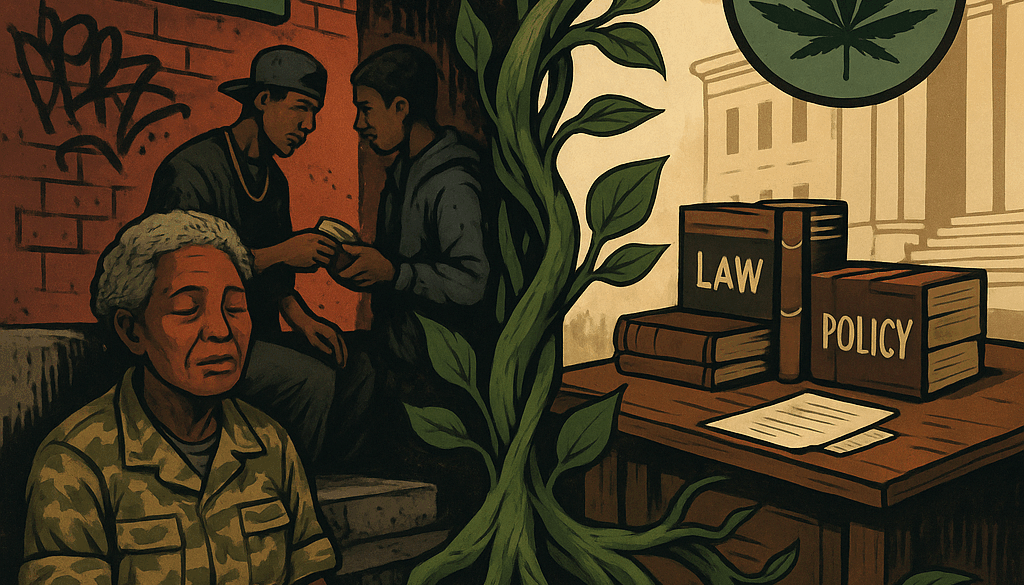
Let’s be honest: even legacy contributors had a leg up. Yes, they were criminalized. Yes, they survived underground. But they also sold to the very people who are still being left out of these conversations today. They were our neighbors, our caregivers, our cousins. And those original consumers—our clients, our aunties, and our grandmas—are still being left behind by a system that now claims to be inclusive.
Take this example. Your grandmother just realized CBD helps her sleep. She’s on Medicaid. Back when you were legacy, you would have given her something to help her rest. Now that you’re licensed? Now that you’re a social equity recipient? You legally can’t. And worse, many license holders don’t build anything into their business model that makes it easier for folks like her to get access.
That’s not equity. That’s exclusion, rebranded.
We need to shift the conversation. We need to talk about social reciprocity.
Social reciprocity means acknowledging that people have been harmed—and responding with intentional care. It means more than allowing entry into an industry. It means actively reinvesting in the communities that made your entry possible.
And we cannot talk about reciprocity without including clinicians, counselors, and healers.
We are in a field with no standardized clinical language or care pathways around cannabis. Many of us aren’t even trained to talk about it. Those of us who are—social workers, counselors, therapists—are often left to create those standards ourselves. We watch our clients get referred to a $250 cannabis consultation that ends with a medical card but no education, no follow-up, no healing plan, and then stigmatized and punished for the autonomy to choose alternative healing.
Where do they fit? My baby mothers, my foster care survivors, my generational trauma host, my “loud out” boy, the terminally affected by the determinants of their environment?
That’s not care. That’s not justice. And that’s not equity.
Clinicians deserve support, education, and legitimacy in this space. And our clients deserve better than rushed appointments and cash-only dispensary counters.
We’re in a majority-minority crisis. Black and Brown communities make up the majority of those who were harmed by the war on drugs, the majority of consumers, and the majority of patients who could benefit most from this medicine. Yet we remain the minority in ownership, research, and standard-setting.
That’s why we can’t stop at equity, because equity without reciprocity is just gentrified justice.
Social equity gave us the language.. Social reciprocity can give us the power to heal.
Let’s stop pretending they’re the same thing.
About the author:
LaKeshia Ashley, MSW, LCSW-C, CCTP-A is a licensed Clinical Social Worker, psychotherapist, medical cannabis student, advocate & educator