When She Talks, People Listen: Sirita Wright
Whether it’s with a pen or a microphone, Sirita Wright is going to make sure you hear her loud and clear.
I’ve known of Sirita for a while. Back when we were starting CashColorCannabis, it wouldn’t take long before I looked over my shoulder and saw EstroHaze. Alongside Kali Wilder and Safon Floyd, they created space and visibility for Black women in cannabis.
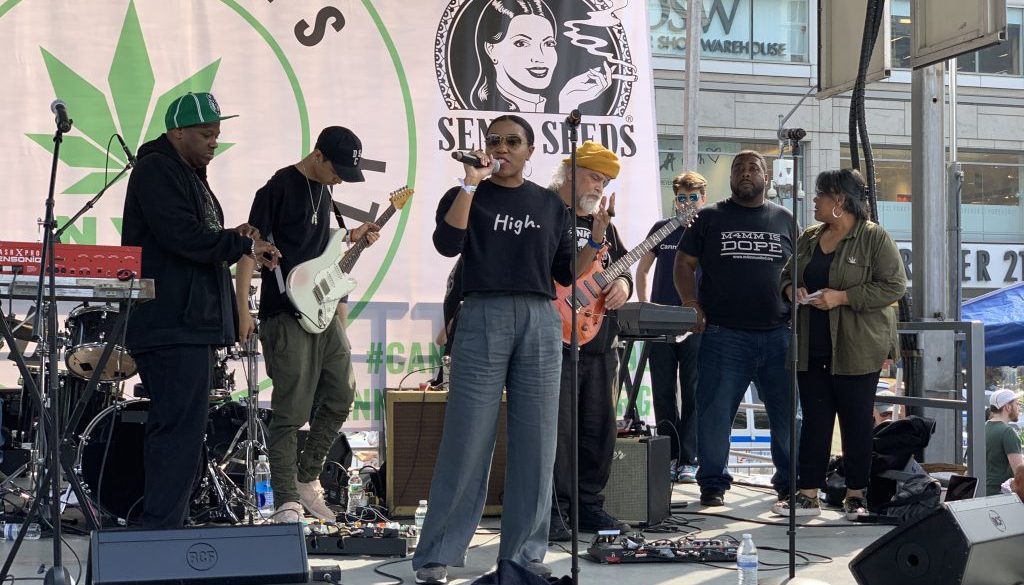
A person of many hats, Sirita spent time working at Black Enterprise. It was there that she met Wilder and Floyd. The three would go on to pioneer a platform that shined a light on Black women in cannabis. After watching EstroHaze grow, Sirita would take her talents to government, where she now serves as Communications and Public Affairs Manager at the Maryland Office of Social Equity.
In honor of Women’s History Month, I wanted to highlight someone who has a knack for making history.
We spoke with Sirita about the start of EstroHaze, her pivot into policy, the realities of burnout in the cannabis industry, and more.
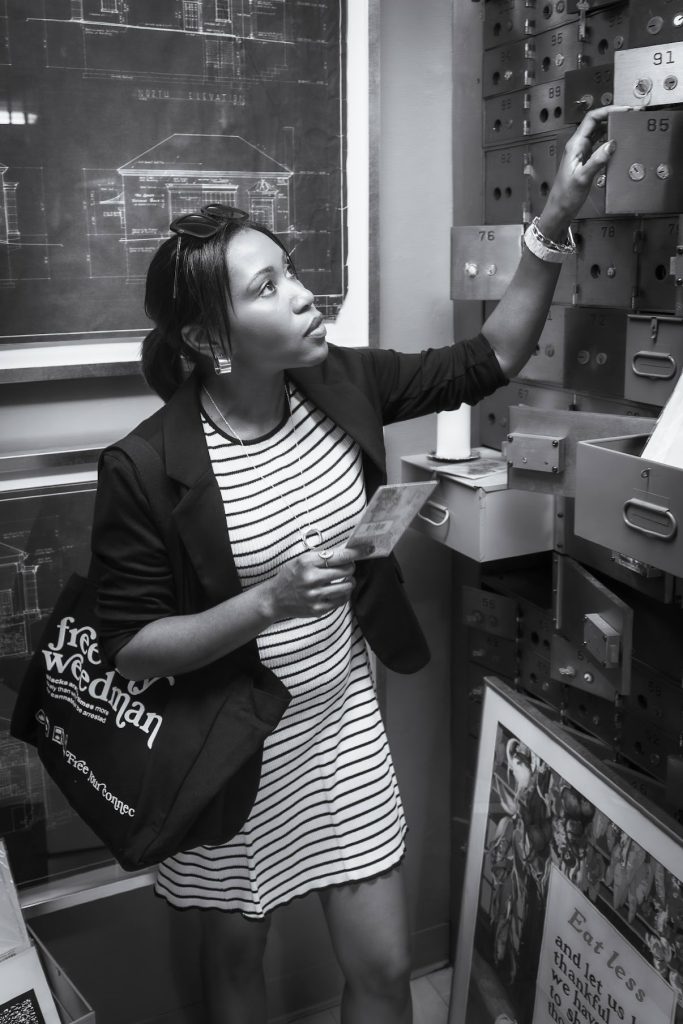
CashColorCannabis: I have been a fan of yours since I first found out about EstroHaze. Speak to us about EstroHaze and how it came to be.
Sirita Wright: EstroHaze started organically in a Bed-Stuy apartment. At the time, Kali, Safon, and I were all working at Black Enterprise. One day, we realized we were getting off at the same train stop, walking the same route home, and living this parallel life. Thursdays became our ritual. We’d go to Safon’s house, roll up, order food, and watch Shondaland. It became our safe space to decompress from the corporate grind.
At the time, we were seeing outlets like Vice cover cannabis, but they were missing the nucleus of our lived experience: professional, educated Black women using this plant to navigate their lives.
We started writing about it for our day jobs. Those stories—like my list of Black cannabis entrepreneurs—went viral. That’s when we realized we were sitting on a goldmine of insight and community.
We started a podcast just because we were laughing at ourselves and having fun. But eventually we looked at each other and said, “We need to take this seriously.”
We later moved to Boulder for six months to participate in a seed-stage accelerator and figure out how to turn our passion into a real business.
Thursdays became our ritual. We’d go to Safon’s house, roll up, order food, and watch Shondaland. It became our safe space to decompress from the corporate grind.
At the time, we were seeing outlets like Vice cover cannabis, but they were missing the nucleus of our lived experience: professional, educated Black women using this plant to navigate their lives.
We started writing about it for our day jobs. Those stories—like my list of Black cannabis entrepreneurs—went viral. That’s when we realized we were sitting on a goldmine of insight and community.
We started a podcast just because we were laughing at ourselves and having fun. But eventually we looked at each other and said, “We need to take this seriously.”
We later moved to Boulder for six months to participate in a seed-stage accelerator and figure out how to turn our passion into a real business.
CCC: EstroHaze helped bring women’s voices to the forefront of cannabis media at a time when the space was still very male-dominated. Looking back now, what do you think that platform helped shift in the culture or conversation around women and cannabis?
SR: EstroHaze proved that we exist in dynamic and multifaceted ways. Before us, the media either ignored Black women in cannabis or stigmatized them.
We showed up as three college-educated women with professional jobs, but we weren’t leading with our résumés. We were leading with the culture and the plant.
I think we helped shift the narrative so women could see that they could be feminine, soft, and empowered leaders without letting the plant stigmatize them.
We allowed women to be seen. We showed that you didn’t have to shrink yourself to fit into the industry. The plant could actually empower you to lead.
Most importantly, we built a community that proved there are more of us ready to uplift each other than people realize.
CCC: What was your favorite moment from your time building EstroHaze?
SR: Getting accepted into Canopy Boulder was easily my favorite moment. Out of hundreds of applicants, they chose us—three Black girls from Brooklyn who had roots in Maryland, Miami, and Missouri.
It was validation. Nobody gives you money unless they see a real opportunity.
We took a massive chance. We quit our jobs, left our apartments, and left our relationships behind. I even left my Yorkie, Dolce (RIP), and moved to Colorado to immerse ourselves in a culture where we could finally breathe and build.
My favorite memory actually isn’t a business moment. It was our morning ritual. We would get up and meditate together before facing the day.
That experience solidified a sisterhood that is still foundational in my life today. We still take a yearly trip together to reconnect and remember where it all started.
CCC: What was the biggest lesson you took away from that experience?
SR: The biggest lesson was to feel the fear and do it anyway.
It took an incredible amount of guts for all three of us to walk away from the “security” of a major media outlet like Black Enterprise to bet on our own vision.
I also learned the importance of running your own race. If you keep your head down and do the work with integrity, you will get recognized.
There is a special sweetness when the industry finally gives you your flowers because they simply can’t ignore the value you created.
CCC: Since EstroHaze, you moved on to working with the government, specifically the Maryland Office of Social Equity. What is your role there, and what does your work focus on?
SR: My title is Communications and Public Affairs Manager, but my day-to-day work is really about organizational transformation.
Beyond advising on our monthly newsletter that serves nearly 3,000 Marylanders, I’m a lead thought partner on high-profile strategic projects. I helped lead the adoption of systems like monday.com to organize our office’s output, and I co-led our strategic planning day to map out services and programs for licensees.
I work at the intersection of our mission—helping Marylanders learn, grow, build, and heal—and the broader goal of the Department: Work, Wages, and Wealth.
Whether I’m collaborating on messaging around our CEO accelerator at Coppin State or making sure our social media doesn’t sound like typical government talk, my focus is making sure this office operates with the speed and cohesion of a high-level brand.
CCC: You’ve moved from storytelling in media to shaping messaging around cannabis policy. How does your background in media influence the way you approach equity work today?
SR: It comes down to one thing: plain language.
I approach policy and programming as a patient and consumer first. When a new regulation drops, my media brain immediately asks: What does this actually mean? Why should people care?
My background allows me to strip away jargon and show the human side of equity. People can’t support policies they don’t understand.
My job is to make sure our message is clear, resonant, and real so equity isn’t just a word on paper but something people can actually feel.
CCC: From your perspective, what does meaningful equity actually look like in practice?
SR: Meaningful equity means building an entire ecosystem, not just handing out a license.
It’s about creating the conditions for businesses to survive and scale. That means looking at everything—from zoning to funding to giving agencies like ours the resources and time to actually build something sustainable.
Building an agency like the OSE is like launching a brand. Coca-Cola didn’t become a household name overnight. Equity requires the same long-term investment.
It also requires honesty. You can’t support legalization while banning consumption everywhere.
If we truly want to open the market, we have to push conversations around cannabis tourism, patient access, and long-term infrastructure.
This industry isn’t just American anymore. It’s global.
Meaningful equity means the people most impacted by the War on Drugs are leading the next phase of innovation and commerce.
CCC: What do you think are some of the biggest misconceptions people still have about social equity in cannabis?
SR: One frustrating misconception is that social equity is a handout.
These are small business owners and entrepreneurs. In any other industry we provide resources to help small businesses succeed. Cannabis should be no different.
Another issue is education. Trillions were spent on War on Drugs propaganda. We need the same level of investment in re-education.
Most people don’t even know they have an endocannabinoid system. Their bodies are literally wired to interact with this plant.
We’ve been taught cannabis is a gateway drug, but many neuroscientists and indigenous traditions have long viewed it as something closer to an exit drug or spiritual tool.
We have to move past propaganda and start seeing the science and humanity behind the plant.
CCC: You’ve been developing a concept called “Sacred Spaces,” built around what you call Protection-Centered Management. What inspired this work?
SR: As a Fellow in the Sacred Spaces program at the Washington National Cathedral, I’m learning how to hold space for fundamental change through a spiritual lens.
Out of that work, I developed the Protection-Centered Management framework because the builders in this industry need protection too.
The framework uses concepts like the weathering hypothesis to show how burnout, particularly among Black and Brown leaders, literally affects both personal well-being and professional outcomes.
The goal is to give leaders tools and resilience models so they can stop the burden distribution that is draining both our spirits and our businesses.
CCC: What advice would you give to women who want to enter the cannabis industry today?
SR: First, run your own race. It’s easy to get distracted by what everyone else is doing, but your story is yours.
Second, build a coalition of sisters. You need people who will ground you.
Third, get to know people for yourself. This industry has a lot of noise and bitterness. Don’t let someone else’s experience dictate your judgment.
Finally, we need to ask more from the brands that benefit from the culture. We see companies leverage the cool factor through celebrity partnerships, but there’s still a gap when it comes to direct investment in the ecosystem.
I’d love to see more grants, scholarships, and real support for the entrepreneurs actually doing the work.
CCC: When people look back at your contributions to cannabis culture and policy, what do you hope they say?
SR: I hope they say, “I saw myself in her.”
The path to leadership isn’t always a straight line. I went from fashion merchandising and acting to co-founding EstroHaze, to directing the launch for Mike Tyson’s Holy Ears, and now to a historic role in government.
I followed the signs, set boundaries, and stayed authentically myself.
If there’s a legacy I want to leave, it’s that I wasn’t just a voice in the room. I was a cultural architect helping build infrastructure so others could find their own highest point.