
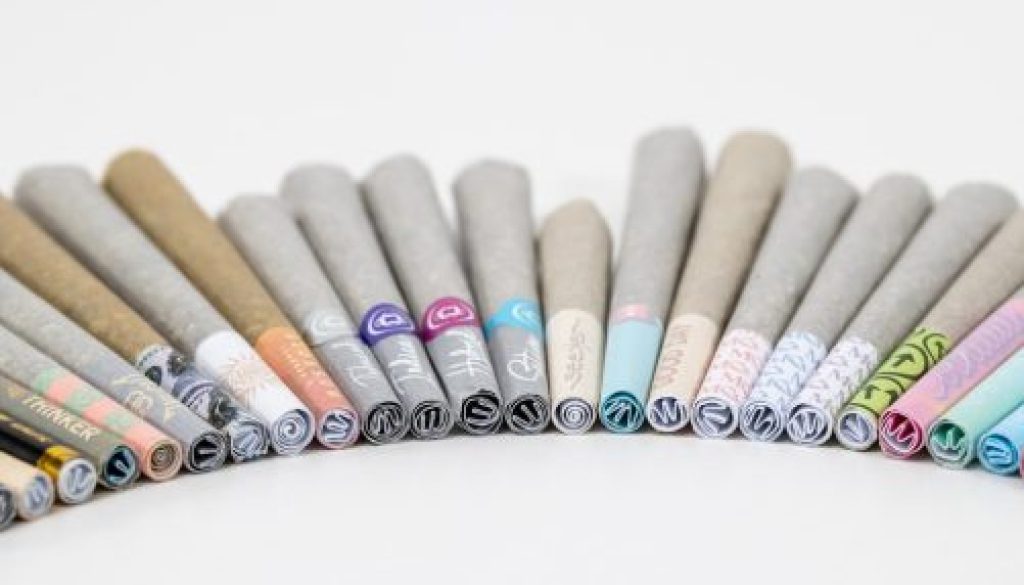
Industry Insight: Why Pre-Rolls Continue to Dominate
As cannabis markets mature across the U.S. and Canada, few categories have leveled up as quickly or as profitably as pre-rolls. What was once considered just an add-on product has become a primary revenue driver for brands like Jetter and more.
In this guest contribution, James Valentine of Custom Cones USA breaks down the data behind the pre-roll boom, from unit growth and infused innovation to the multi-pack formats fueling higher price points. If you’re paying attention to where the category is headed next, this is required reading.
To say the pre-roll market is booming would be an understatement.
In the U.S., pre-rolls are the third-highest-grossing cannabis product category behind only flower and vapes, and the top-selling product by units moved, overtaking flower in 2025. It’s also the fastest-growing sector according to cannabis analytics firm Headset, which tracks 18 state and provincial markets in North America.
In Canada, pre-rolls passed flower in total sales to become the leading product in the national legal market, with nearly double the unit sales of the next highest mover, edibles.
While this rise to a major product category did not happen overnight, the trend of hyper-growth began on day one. Once seen as an add-on, the pre-roll has become one of the most dynamic and profitable products on the market today, driving growth across the entire industry.
The Evolution of the Pre-Roll Market
When a legal cannabis market opens, demand for flower is overwhelming. That means producers often dedicate smaller buds, sugar leaves, trim, and shake to pre-roll production, while premium flower goes to other formats.
As harvest cycles stabilize and more flower becomes available, pre-roll quality improves. Higher potency leads to higher sales. Once markets mature and concentrate prices begin to drop, infused pre-rolls become a consumer favorite.
A clear trend in maturing markets is the “hockey stick” growth curve. New markets experience a sharp rise in pre-roll sales during the first few years, followed by leveling as category maturity sets in.

As consumers build loyalty to pre-rolls, drawn by convenience and accessibility, brands and dispensaries benefit from increased basket sizes, repeat visits, and stronger retail performance. When flower sales slow due to competition and changing consumer preferences, producers can leverage high-quality flower to expand into premium pre-rolls and high-THC concentrate products.
The Growth Drivers of Pre-Rolls
Early market hypergrowth is fueled by the introduction of high-THC concentrates, creating potent infused pre-rolls that command higher prices. These products allow brands to introduce premium SKUs that generate stronger revenue.
Multi-packs also play a significant role. Infused multi-packs in particular drive up average price points. Premium formats such as glass- or wood-tipped joints and blunts also command higher prices compared to traditional shake-based pre-rolls.
As markets reach maturity and revenue growth slows, unit sales continue to increase. Revenue plateaus are largely influenced by price compression in competitive markets.
Pre-Rolls By the Numbers
In the U.S., 2025 sales reached $3.6 billion, representing 110% growth from 2021 sales of $1.7 billion. The category added approximately $500 million annually from 2021 through 2024, with growth slowing to $300 million from 2024 to 2025.
Over the same period, flower grew 32% from 2021 to 2025, while vapes grew 80%. Vapes maintained their position as the second highest revenue category with $2.4 billion in additional sales over pre-rolls.
Unit sales tell a different story. Pre-rolls saw 164% growth from 2021 to 2025, surpassing flower in 2025. Vapes experienced 162% growth, while flower grew at roughly half that rate.
In Canada, pre-rolls now lead the market.
From 2021 to 2023, flower significantly outpaced pre-roll sales. In 2024, the gap narrowed to just 1.5%, or $20 million. In 2025, pre-rolls officially overtook flower, adding $80 million in sales while flower declined by $30 million, giving pre-rolls a 7% sales lead.
Pre-rolls also lead in unit sales in Canada, moving 47 million more units than flower, 52 million more than vapes, and 35 million more than edibles.
The Pre-Roll Segments Driving Sales
In both the U.S. and Canada, two segments dominate: hybrid and infused.
In the U.S., infused pre-rolls now generate the most revenue at $1.7 billion compared to hybrid pre-rolls at $1.3 billion. Although hybrids initially led by $280 million in sales, they grew 74% from 2021 to 2025. Infused pre-rolls, by contrast, grew 253% over the same period and became the segment leader in 2023.
Indica pre-rolls rank third but trail the top two segments by over $1 billion in sales.
Hybrids outsell infused products in unit volume by 31 million units, but the higher price of infused pre-rolls secures their revenue dominance.
In Canada, hybrid pre-rolls still hold a modest $9 million revenue lead over infused products. However, infused pre-rolls gained $31 million in sales compared to $15 million growth for hybrids, positioning infused products to potentially overtake hybrids in revenue.
Hybrids lead in volume, moving 31 million units compared to 20.4 million infused units. With average prices of $25.43 for infused versus $16.80 for hybrids, revenue leadership may soon shift.
The Brands Leading the Way
California-based Jeeter leads North American pre-roll sales, generating a quarter-billion dollars in U.S. sales in 2025. Jeeter leads STIIZY by $40 million in U.S. sales and generated $63 million in Canadian sales. Despite entering Canada in March 2024, Jeeter sold 1.9 million units and secured the number three spot in Canadian pre-roll revenue.
In Canada, General Admission leads Back Forty by $36 million in sales.
Across both countries, over 95% of products from leading brands are infused pre-rolls. Among the top three brands in each country, only Dogwalkers offers a broader hybrid selection, with 35% infused and 54% hybrid products.
Multi-packs are central to revenue growth. In the U.S., 52% of pre-roll products are single units. In Canada, only 23% are singles. Because multi-packs command higher prices, they account for 87% of Canadian pre-roll revenue compared to 54% in the U.S.
From early-market trim joints to mature-market premium infused formats, pre-rolls have evolved into a key revenue driver for the cannabis industry. With infused products, hybrids, and multi-packs leading category performance, brands should continue refining product strategies to meet consumer demand.