

Gumbo Just Ain’t the Same Without Okra: Black Cannabis Business Owners on Schedule III Reclassification
The federal government reclassified medical marijuana from Schedule I to Schedule III, marking what many are calling the most significant cannabis policy shift in decades. This move places cannabis in the same category as substances like Tylenol with codeine and ketamine; drugs recognized as having accepted medical use with moderate to low potential for physical dependence. Schedule I, where cannabis previously resided alongside heroin and LSD, is reserved for substances the government claims have no accepted medical use and high potential for abuse.
On paper, this sounds like progress. In practice, the celebration is complicated.
What This Means for Cannabis Consumers and Businesses
For medical cannabis patients, Schedule III reclassification opens doors to federal research funding that could validate treatments many have relied on for years. In theory, this could lead to standardized dosing guidelines, FDA-approved cannabis medications, and insurance coverage for medical marijuana, though none of these outcomes are guaranteed or imminent.
For recreational cannabis consumers, this changes very little. Schedule III doesn’t legalize recreational use at the federal level. State-level recreational programs continue operating as they have, and consumers in prohibition states remain criminalized. The reclassification specifically addresses medical marijuana, leaving the recreational market untouched by federal policy.
The banking situation, one of the industry’s most persistent operational nightmares, remains largely unresolved. While some financial institutions may become more willing to work with cannabis businesses now that the plant is no longer Schedule I, there are no new federal protections mandating banking access. Cannabis businesses may still operate in a legal gray area when it comes to financial services.
The most concrete immediate benefit for cannabis businesses is tax relief. Under Section 280E of the tax code, businesses dealing with Schedule I or II substances cannot deduct ordinary business expenses. With cannabis now on Schedule III, operators can finally deduct rent, payroll, utilities, and other standard operating costs, a change that could save established companies millions annually.
But here’s where the okra is missing from the gumbo:
This tax benefit primarily helps businesses already profitable enough to owe significant taxes. Small operators struggling to stay afloat, Black-owned businesses fighting for market share, and equity licensees still trying to open their doors won’t see immediate relief from their biggest challenges: access to capital, banking services, reasonable real estate costs, or protection from corporate consolidation.
To understand what Schedule III reclassification actually means on the ground, I spoke with two cannabis business owners navigating this moment: Brandon Wyatt, Esq., Co-founder of Blvck Market Official, a Maryland state-licensed cultivation facility, and Marne Madison, founder of Fleur Verte Academy, a Missouri-based consulting and education agency.
The Business Owner Perspective
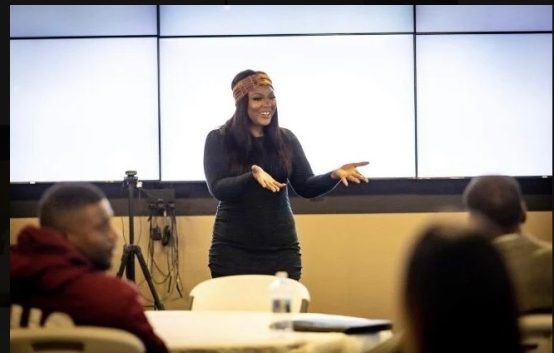
Marne Madison on celebration versus reality:
“Schedule III feels like a double-edged sword. Of course, we wanted to see a day when cannabis would be legal. I didn’t envision a world where we would still be incarcerated. On one side, the sword is sharp with opportunity; it cuts through stigma, helps patients, opens doors to research, legitimizes the plant, and gives businesses a little more room to breathe. It’s the side people are celebrating, the one that looks like progress. But the other edge cuts just as deep. Because while the industry gains recognition, there are still people, our people, sitting in cells, carrying records, locked out of the very market they helped build. That same sword is a reminder that policy can evolve without justice catching up. You don’t ignore the edge that’s helping you grow, but you also don’t forget the edge that’s still doing harm. You use this moment not just to elevate business, but to push for release, expungement, and real equity. Because a win that only cuts one way isn’t justice.”
Marne Madison on what real success would look like:
“Reclassification is a hindrance, not a solution. It eliminates a few hurdles, but it doesn’t fix the problems that small operators actually survive day to day. Real success would look like the basics of doing business no longer being obstacles.
First, money has to move normally. That means clear, permanent banking protections, not just provisions that can shift with administrations. Verbiage that would allow small operators to open accounts without restrictions or unrealistic capital requirements, access to credit, lines of capital, and merchant processing. This would potentially lower the cost of compliance and security, no more all-cash risk.
True progress for businesses would be the ability to deduct ordinary expenses like any other business and to potentially engage in interstate trade. This could reduce costs and stabilize supply chains, allowing legacy brands and minority operators to scale beyond one state. However, it must include protections to prevent large MSOs from wiping out local equity businesses. When it comes to interstate commerce, I’m not sure how to feel. I know it may seem like a win, but we would be opening the floodgates to a more open, corrupt market.
Success would mean consistent baseline rules based on federal guidance on licensing standards, compliance, and safety, with mandated requirements for states to implement real social equity programs, not just promises to keep us quiet. Emphasizing enforcement to ensure equity licenses aren’t set up to fail, with access to capital, real estate, and operational support.
We need justice that actually shows up. Policy isn’t successful if people are still locked out or locked up. We are advocating for automatic expungement tied to federal reform, resentencing and release pathways, reinvestment funds that directly reach impacted communities that were impacted by the war on drugs.
And finally, access to capital that’s built for us. Not just traditional loans, but federally backed microloans or grant programs for small and legacy operators, priority funding for equity licensees, and community-based lending models that understand this industry, not penalize it.
Until then, Schedule III is merely a shift in language, not a shift in our harsh reality. I see this as a shift that widens the door for corporations before it stabilizes the foundation for Black-owned businesses. When barriers like limited access to banking and capital, and regulatory complexity, remain stacked against smaller operators, expanding the industry doesn’t create fairness; it pushes us out. So while others are celebrating ‘growth,’ we’re fighting to survive that growth.”
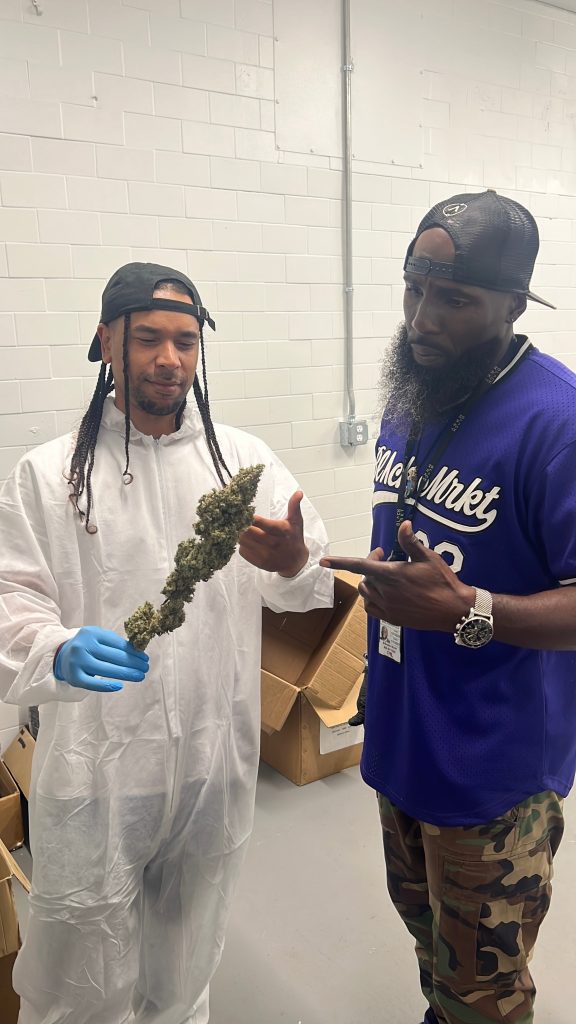
Brandon Wyatt on research funding and equity:
Wyatt speaks from multiple intersections: operator, attorney, veteran, and patient, and his perspective cuts through the celebration with sharp clarity.
“There is no expungement tied to this. No resentencing. No recidivism provisions. No direct pathway home for people still navigating the consequences of the prior classification. The communities that bore the weight of prohibition aren’t automatically the ones who benefit from reform, and that gap is intentional if nobody names it. For small Black-owned businesses, the 280E relief exists on paper but not in practice. That’s not cynicism, that’s cash flow.
When it comes to research, the federal government has spent billions touching Schedule III substances, but almost none of it has been framed or administered as ‘Schedule III research.’ The money flows through addiction response (SAMHSA), veteran mental health (VA/DoD), and NIH institute silos; each with their own priorities, their own gatekeeping, and almost no explicit equity or community-based research mandate attached.
This rescheduling opens the door to expanded study, but it opens that door at a moment when specific funding streams, programs, and language tied to diversity, equity, inclusion, and population-based research have been narrowed or removed. That matters. Because without those frameworks, we have to ask seriously whether the data being produced will reflect the communities most impacted…both by public health outcomes and by policy.”
We’re also seeing a reliance shift where courts, rather than clearly defined federal guidance, may end up shaping how research is conducted and protected, particularly for veteran populations across different service eras. That is a fragile place for public health policy to sit.
Without intentional direction and DEI, meaning inclusive regulatory standards in research frameworks, federal research funding flows toward institutions and populations that already have access, not the communities that bore the cost of prohibition.
The Bottom Line
For consumers, particularly medical cannabis patients, Schedule III reclassification represents potential. For business owners, the picture is more complicated.
The biggest gap remains justice. Reclassification doesn’t free a single person incarcerated for cannabis offenses. It doesn’t expunge records. It doesn’t create pathways to the industry for those most harmed by prohibition. Policy evolved without justice catching up, and that’s the okra missing from this gumbo.
Readers interested in understanding the full scope and implications of this reclassification should review the order directly.
Progress? Yes. Justice? Not yet. Victory? Only if we keep pushing for the rest.
Author bio:
Veronica “Vee” Castillo is the Traveling Cannabis Writer, an international traveling plant medicine journalist who has spent over seven years documenting cannabis culture across the United States and internationally, including Thailand, where she explores the intersection of ancient plant medicine traditions and modern cannabis culture. With over 25 publications and celebrity interviews to her credit, along with her role as former Communications Director for a leading minority cannabis trade association and author of Cannabis Legacy Chronicles, she has dedicated her career to amplifying BIPOC voices and authentic stories in plant medicine. Back on the road covering cannabis internationally, Vee helps wellness and cannabis businesses worldwide transform their unique stories into strategic content that drives measurable growth and global visibility.