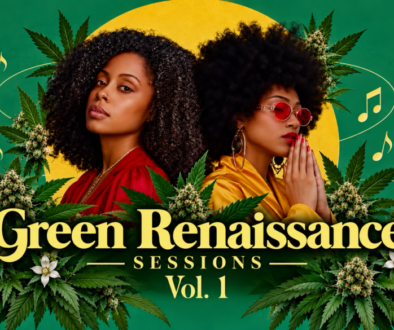
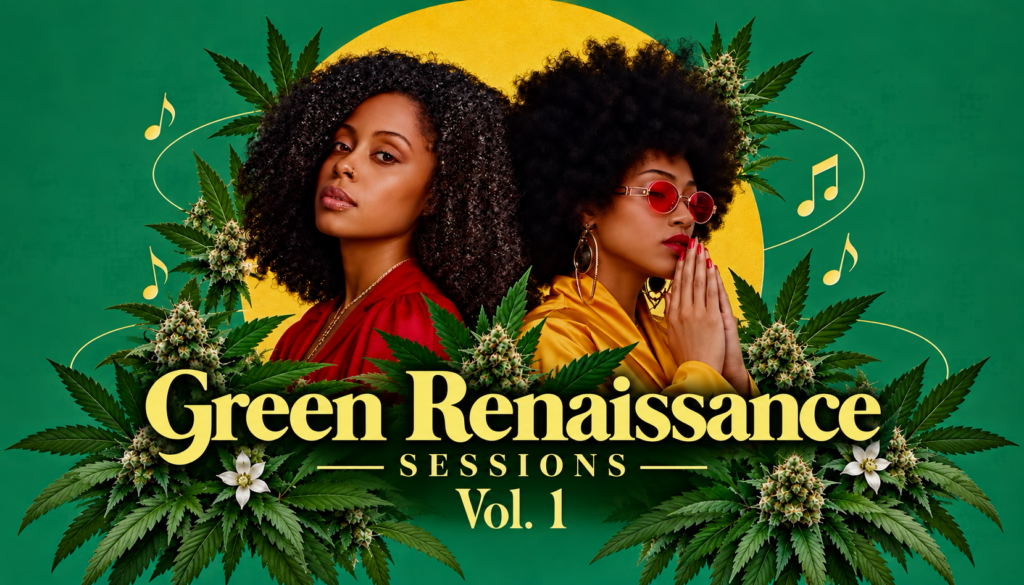
The Green Renaissance Sessions, Vol. 1
For most of modern cannabis history, systemic agendas told one story about the plant while culture preserved and narrated a different reality.
Government campaigns called it the devil’s lettuce. Communities were criminalized around it. People went to jail for it, disrupting families in the process. And yet, across generations, cannabis remained present in music, language, ritual, medicine, creativity and everyday life.
Long before legalization created a mainstream industry, the culture was already preserving the plant’s legacy.
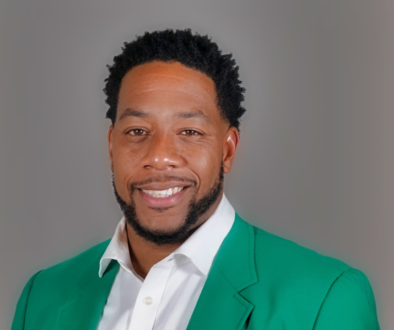
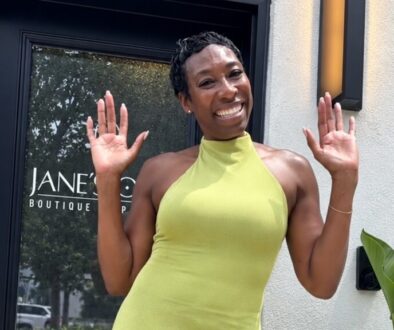
That idea sits at the center of The Green Renaissance Sessions, a collaboration between me, JM Balbuena, and artist, medicine woman and Zen & Kush founder Lizzy Jeff. The playlist was created as a musical companion to my book, Green Renaissance.
The Green Renaissance Sessions, Vol. 1 moves through cannabis history not chronologically in the traditional sense, but culturally. Across 42 songs, reggae sits beside jazz, hip-hop beside R&B, and contemporary plant-medicine music beside records that helped create the vocabulary generations would later inherit.
Collectively, the songs tell a compelling story: what the plant meant before the stigma, how it traveled through communities, what prohibition attempted to erase, how musicians refused to stop talking about it, and how those traditions helped shape the present-day normalization of cannabis.
Two truths remained clear throughout our collaboration: yes, this is a playlist about getting high. But more importantly, it is a playlist about how a plant survived more than a century of negative press through communal storytelling.
Before the stigma
The story begins with the plant itself.
Palo Xanto’s “THAT HERB” introduces cannabis not as contraband, but as something organic, ancestral and worthy of relationship. From there, Lizzy Jeff’s “Goddess Code” and Lavva’s “Exhale” establish a vocabulary far removed from the one historically imposed by prohibition: ritual, femininity, consciousness and spirituality.
For Lizzy, placing “Goddess Code” here was deeply intentional.
“It embodies feminine essence and spiritual inspiration. I infused the song with intention and prayers to my grandmothers. It represents embodiment—roll it up, inhale, exhale and allow the spirit to lead you.”
Her framing speaks to something larger within the playlist: there has always been a dynamic relationship between cannabis and music.
As Lizzy puts it, “Cannabis and music are such a perfect pair, especially when the feminine essence is celebrated and uplifted.”
That conceptualization matters more than the surface may suggest.
Cannabis existed as one of many useful plants within human civilization thousands of years before the twentieth century propagated the image of the “marihuana criminal.” Long before propaganda, it had been medicine, fiber, sacrament, commodity, agricultural crop and cultural symbol.
Before cannabis became a political problem, it was simply a remarkably useful plant.
That starting point in The Green Renaissance Sessions, Vol. 1 sets the stage for the shifts that come afterward.
A Borderless Green Culture
Cannabis culture has never belonged to one city, one race or even one continent.
The playlist moves into the Caribbean through Bob Marley & The Wailers’ “Kaya,” Sugar Minott’s “Herbsman Hustling,” Stephen Marley and Melanie Fiona’s “No Cigarette Smoking (In My Room),” Koffee’s “Blazin,” Etana and I-Octane’s “Ganja For You,” Luciano’s “Herb Minister,” and Hempress Sativa’s “The Weed Thing.”
In this arc, cannabis is not hidden.
It is sung about unapologetically.
Be it ganja, herb or kaya, language itself becomes evidence of the plant moving between communities and acquiring intentional meaning through those communities.
Luciano’s “Herb Minister” captures that relationship through joy, spirituality and reverence. Lizzy describes the record as almost medicinal in its own right:
“It feels like a poetic prescription. You can learn, heal, dance and praise God. I love how Rastafarian culture uplifts the spiritual essence of the herb and its joy, love and healing power.”
That spiritual relationship is not incidental to the music. It is part of what cannabis means within the cultural traditions that carried it.
Hempress Sativa’s “The Weed Thing” expands that conversation through another important lens: a woman interpreting cannabis culture across Black American and Jamaican traditions.
Lizzy calls it “an anthem” and says the song captures cannabis as a unifying plant.
“It makes me want to grow my own herb, share it with the people I love and live more naturally. We always need the woman’s perspective on this powerful plant medicine.”
That perspective is significant because cannabis culture has often been publicly narrated through overwhelmingly masculine imagery, even though women have always been growers, healers, patients, artists, advocates and consumers within the culture.
The exploration expands further with T3R Elemento, bringing Mexican and Mexican-American cannabis culture into the story through the world of corridos verdes.
And that inclusion holds weight.
Too often, cannabis history gets flattened into a monolith. But the culture surrounding the plant was built from overlapping threads within Black, Latino, Caribbean, immigrant, countercultural and working-class communities whose relationships with cannabis did not disappear simply because governments declared it illegal.
The plant crossed borders despite authorities’ attempts to contain it.
From Reefer to “Controlled Substance”
The transition was relentless.
Cab Calloway’s “Reefer Man” brings us into the jazz era, when cannabis circulated through music scenes whose language would later become part of American popular culture.
Those same communities were living through the early architecture of prohibition. The word reefer eventually became inseparable from the propaganda that followed.
From there, Bob Dylan’s “Rainy Day Women #12 & 35,” Rick James’ “Mary Jane,” Teddy Pendergrass’ “You’re My Latest, My Greatest Inspiration,” Lil’ Kim’s “Drugs” and Afroman’s “Because I Got High” show cannabis passing through several cultural identities.
Sometimes coded.
Sometimes romanticized.
Sometimes absorbed into the broader category of “substances.”
Sometimes turned into comedy.
And somewhere in that evolution, the “stoner” became one of popular culture’s most recognizable archetypes.
The irony is difficult to ignore.
While cannabis users were being caricatured in entertainment, real people were being arrested and incarcerated for the plant, some receiving extraordinarily severe sentences whose consequences continue long after public attitudes toward cannabis changed.
The Underground Became the Culture
The hip-hop takeover became the catapult for cannabis’ loud era.
These records did something incredibly important whether anyone intended them to or not:
They documented cannabis culture during pivotal moments in time.
Through their distinctive narratives, they preserved traditions and cultural nuances: dime bags, breaking down bud, rolling the blunt, passing it, naming strains, bragging about quality, recounting prohibition-era experiences and documenting how cannabis fit into friendships, neighborhoods, parties, creativity and everyday life.
Hip-hop became one of the largest cultural archives of cannabis prohibition ever created.
And it did so unapologetically.
That archive matters because legalization can create the illusion that cannabis culture began when dispensaries started appearing in neighborhoods.
It did not.
Before there were polished retail stores, venture funds and publicly traded cannabis companies, there were communities creating an entire culture around the plant while accepting the legal risk that came with participating in it.
Consequently, the newly created legal industry inherited a culture it did not create.
Normalization
Eventually, something shifted even further.
The references became casual.
Cannabis is still a plant, perhaps now with higher THC percentages, increasingly accentuated terpene profiles and an entire consumer vocabulary built around it, but the cultural temperature has changed.
In music and other art forms, the plant increasingly appears without explanation attached.
That may be one of the strongest measures of normalization.
An explanation is no longer required once the audience understands the reference.
A blunt can become part of a woman’s identity without being treated as inherently transgressive.
A strain name can become the name of a song.
Getting high can sit alongside relationships, fashion, creativity, spirituality and everyday life.
At this moment in the timeline, and within the playlist, culture has moved ahead of policy.
Thus, John Legend’s “Let’s Get Lifted Again” gives way to Luciano’s “Legalise It,” our inevitable demand.
By this point in the story, the argument almost feels undeniable.
If cannabis survived generations of prohibition, if musicians across genres continued documenting its influence, and if millions of people continued using it despite stigma and criminalization, then perhaps the problem was never the plant.
Prohibition attempted to remove cannabis from center stage.
Culture preserved and guarded its evolution from within the margins.
Inevitably, those narratives collided.
The Green Renaissance
The final movement within The Green Renaissance Sessions, Vol. 1 belongs largely to Lizzy Jeff.
That is intentional.
With “KUSH & DAMIANA Freestyle,” “Cloud 9 Freestyle,” “A Beautiful Life” and “Sunkissed Medicine,” the relationship with cannabis showcases evolution once again.
The plant is no longer merely something being defended from the authorities.
It is being reclaimed.
There is pleasure here, but also relief.
There is sensuality, spirituality, intentionality and autonomy.
Lizzy’s presence throughout the playlist also returns us to the idea introduced by “Goddess Code”: cannabis culture is not only about resisting prohibition. It is also about embodiment, connection, healing, ritual and the feminine perspective.
That represents a generation of cannabis culture increasingly interested not just in whether the plant should be legal, but in what kind of relationship we want to have with it now that the narrative is ours to rewrite.
That distinction defines the Green Renaissance.
And it requires asking difficult questions about who gets to participate in the future being built around something so many people were punished for carrying through the past.
Which is why the playlist ends with Palo Xanto’s “PLANT SEEDS.”
After more than 40 songs tracing cannabis through culture, prohibition, resistance and normalization, the final message is not simply to consume.
It is to cultivate, create, reclaim agency, and to plant something special for the generations that come next.
The Green Renaissance Sessions is a collaborative editorial and playlist series from Green Renaissance creator JM Balbuena and artist and Zen & Kush founder Lizzy Jeff, presented in partnership with Cash Color Cannabis. Part I explores the music that carried cannabis through generations of culture, stigma, prohibition and reclamation. Stay tuned for part 2!