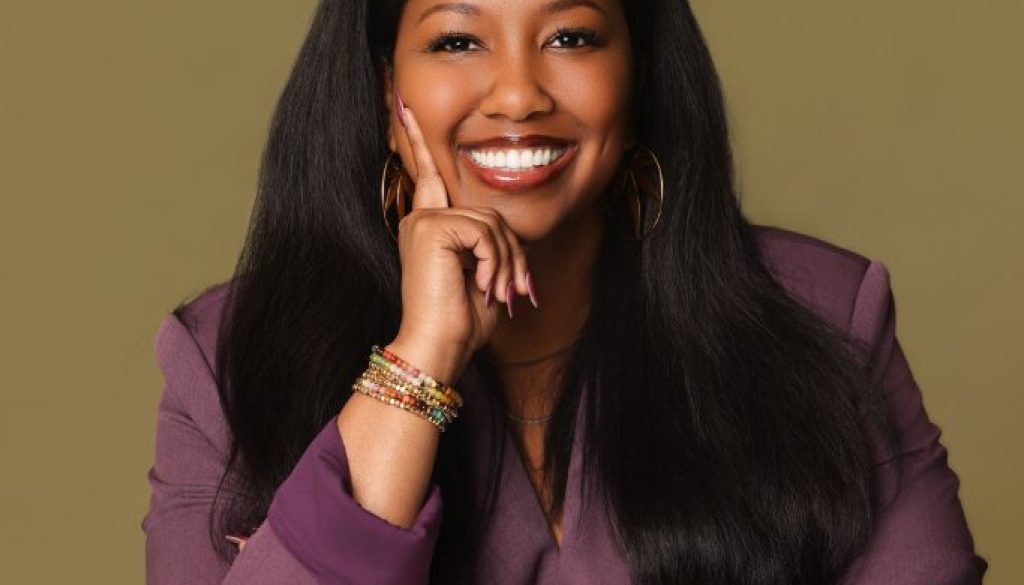
Shot of Energy: Adjwoa Hogue
Adjwoa “Adgy” Hogue didn’t grow up seeing cannabis as wellness. Like many people, especially in Black communities, her earliest understanding of the plant was shaped by fear, stigma, and anti-drug messaging. Today, she’s doing her part to help reshape that conversation through Ash & Nectar, a Texas-based wellness brand blending cannabis, culture, recovery, and intentional living.
In this conversation with CashColorCannabis, Adgy opens up about motherhood, entrepreneurship, representation, and why she believes cannabis belongs in modern wellness spaces just as much as protein shakes and electrolytes do.
CashColorCannabis: For those who are not familiar, please introduce yourself to the CashColorCannabis audience.
Adjwoa “Adgy” Hogue:
Hi, my name is Adjwoa “Adgy” Hogue. Adjwoa is a Ghanaian Akan name that means born on Monday, beautiful, and intelligent.
I’m a Dallas native raised in College Park, Georgia, and I currently serve as co-owner of Pan-African Connection Bookstore & Resource Center, a family-owned bookstore and cultural center that has served the DFW community since 1989.
I’m also an HBCU graduate of the University of Arkansas at Pine Bluff, where I earned a degree in Fisheries Biology, and I hold a master’s in the business of cannabis from LIM College. I’m a licensed hemp sampler in Texas and a food safety professional with more than 15 years of experience spanning farm to fork.
CCC: When was the first time you discovered cannabis, and what was your relationship with the plant like in those early days?
AH:
Growing up, I only heard negative things about cannabis. I was definitely a Red Ribbon Week kid and fully bought into the “Just Say No” messaging because most stories I heard about marijuana were tied to fear, arrests, or people supposedly “spazzing out.”
Even in college, cannabis wasn’t something I explored because I simply didn’t know any different.
Everything changed when I visited a dispensary in Seattle out of pure curiosity. Seeing people of all backgrounds openly purchasing cannabis completely challenged what I thought I knew about the plant. I also realized there was a real business behind it.
That experience sparked my curiosity, and from there I started researching the science, culture, and business of cannabis. Honestly, the rest is history.
CCC: What inspired you to launch Ash & Nectar, and what gap did you feel was missing in the wellness and cannabis space?
AH:
What inspired me to launch Ash & Nectar was realizing there was a gap in the wellness and cannabis space for people like me, especially here in Texas. As a new mom, professional, and active member of my community, I wanted a cannabis experience that felt approachable, discreet, and realistic for everyday life.
A lot of that inspiration also came from navigating postpartum depression, and the pressure moms feel to constantly “snap back” while still caring for themselves. There’s still a lot of judgment around moms and cannabis, so I wanted to create a brand where people could feel safe and not judged for how they choose to unwind.
I didn’t see many brands speaking to women who care about wellness, culture, travel, and balanced living, but also want to consume cannabis without making it their whole personality.
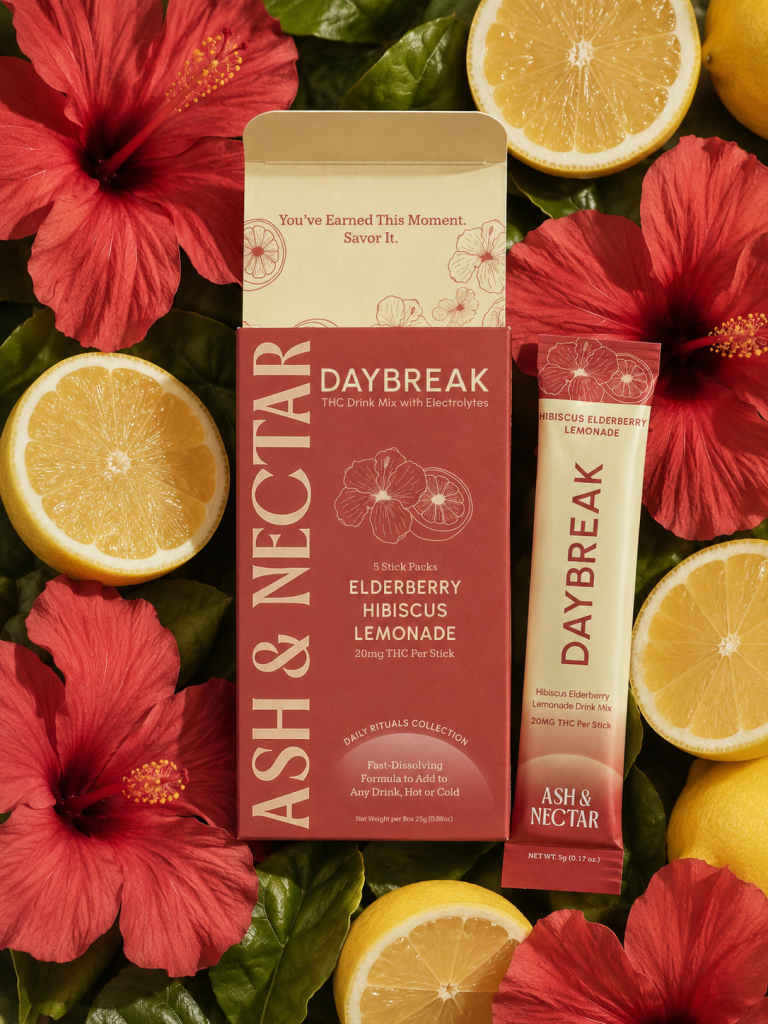
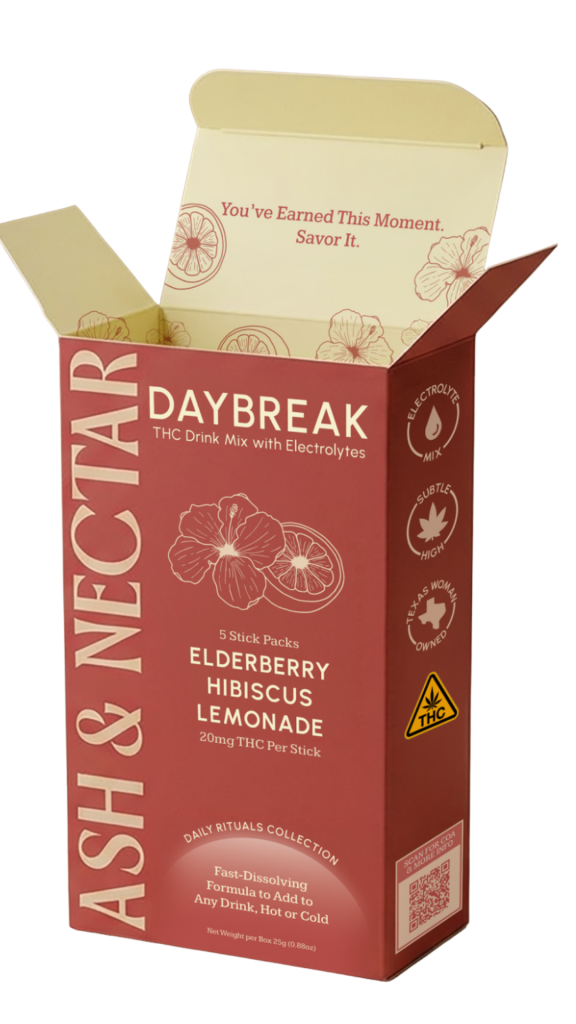
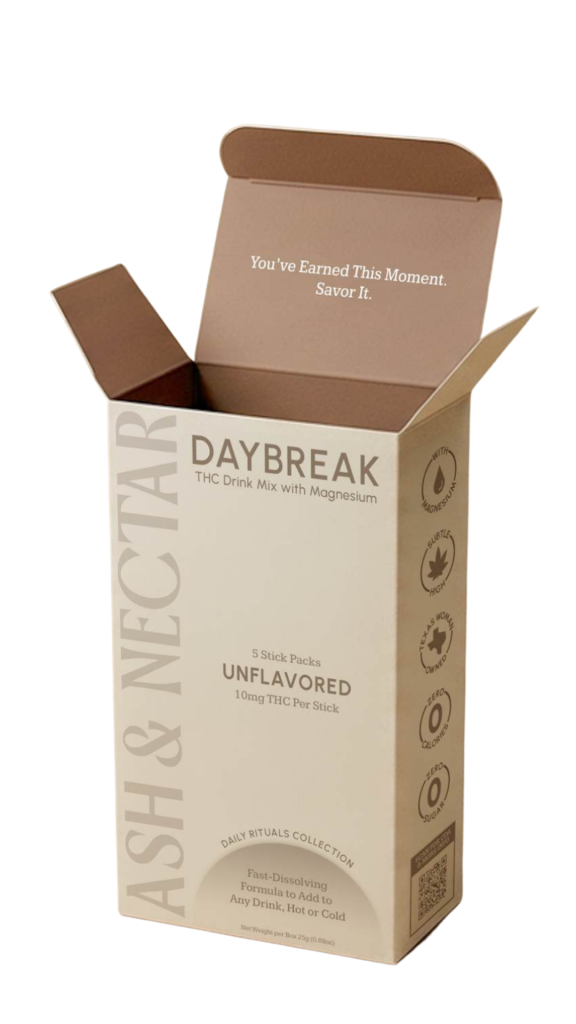
That’s where the idea for Daybreak came from. We wanted to combine cannabis with electrolytes, adaptogens, and nootropics to create a more modern wellness experience.
CCC: Ash & Nectar seem to sit between cannabis, wellness, and lifestyle. How would you define the brand’s mission in your own words?
AH:
Ash & Nectar exists to normalize cannabis as part of a balanced lifestyle. We sit at the intersection of wellness, culture, and everyday living because we want cannabis to feel approachable, intentional, and seamlessly integrated into people’s routines rather than hidden or stigmatized.
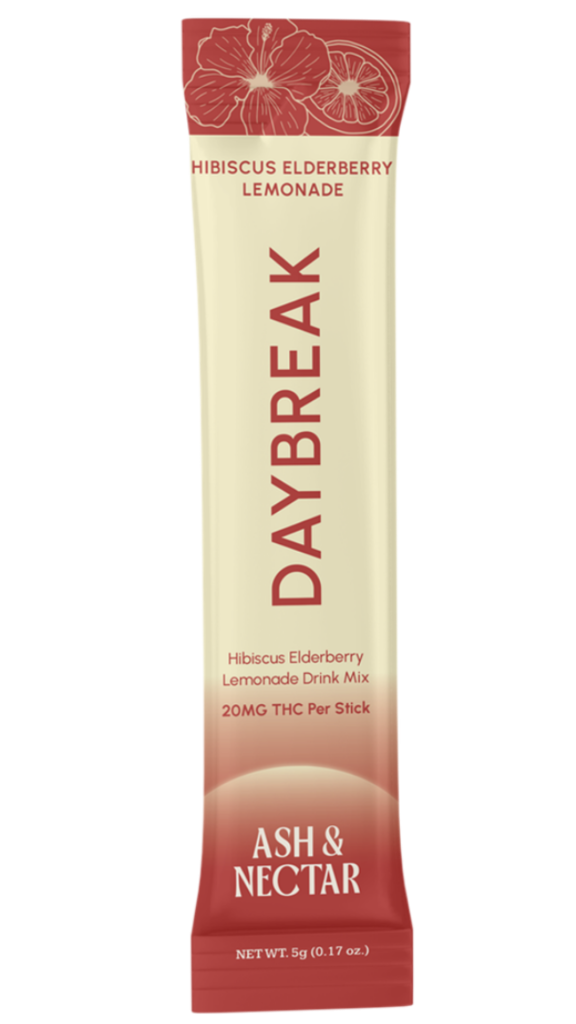
CCC: Your upcoming beverage combines electrolytes with 20mg of THC and is designed around fitness and recovery. How did the idea for this product come together?
AH:
Daybreak came together during a time when I was focused on wellness, hydration, and getting back in the gym. I wanted something that could support recovery while also providing a subtle, relaxing buzz without throwing off my routine.
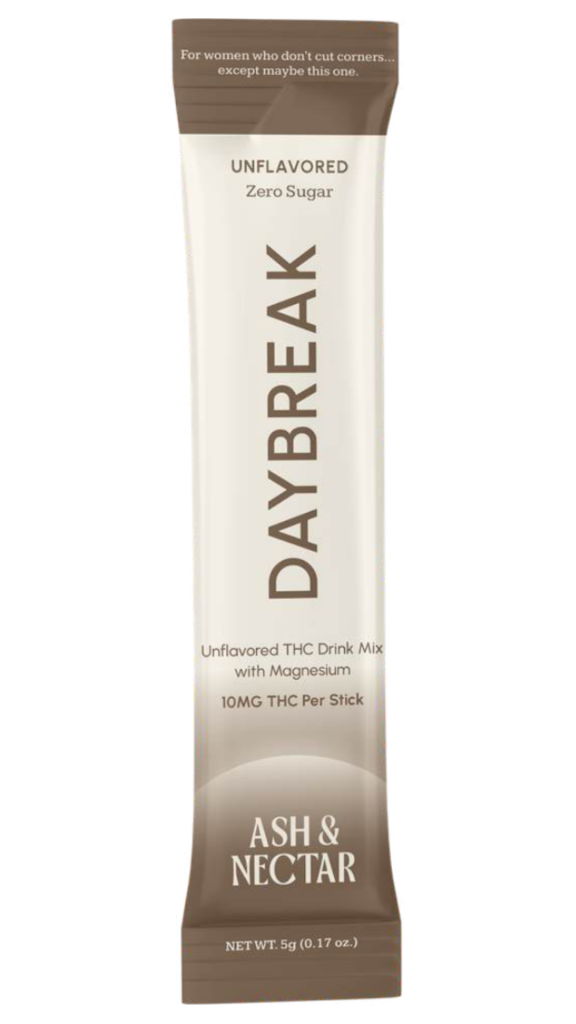
I enjoyed cannabis beverages, but many felt bulky, overly sugary, or inconvenient to travel with. I wanted to create something lightweight, discreet, and easy to carry in a gym bag, purse, or while traveling.
CCC: More athletes and wellness-focused consumers are becoming open about cannabis use. Why do you think cannabis and fitness are starting to connect in a bigger way?
AH:
Professional athletes put their bodies through so much with muscle fatigue, inflammation, travel, stress, and lack of sleep. I think people are starting to connect cannabis and fitness because the conversation is shifting more toward wellness, recovery, and mental health instead of the old lazy stoner stereotype.
I love seeing athletes like Kevin Durant, Carmelo Anthony, Al Harrington, Megan Rapinoe, and Ricky Williams becoming more open about cannabis and recovery.
CCC: Building a cannabis wellness brand in Texas comes with its own challenges. What has that experience taught you about entrepreneurship and perseverance?
AH:
Building a cannabis wellness brand in Texas has taught me patience, perseverance, and the importance of staying focused and adaptable. I originally wanted to launch last year, but with Texas constantly changing hemp laws and regulations, I had to pause and make smart business decisions rather than rush a product to market.
My father always used to say, “Forward forever, backward never,” and that mindset stayed with me throughout this entire journey. I’ve always believed that if I commit to something, I follow through.
CCC: As a Black woman founder in cannabis, what does representation mean to you, especially in the wellness sector?
AH:
Representation means everything to me as a Black woman in cannabis and wellness. I recently read Start With Yourself by Emma Grede, and one quote that stayed with me was, “You can’t be what you can’t see.”
When I first entered the cannabis industry, I felt like a lost Texas girl trying to figure out what was real, what was legal, and how to break into the space. That’s why traveling to legal states and attending women’s cannabis conferences became so important for me.
Seeing women like Precious Osagie-Erese, Solonje Burnett, Dasheeda Dawson, and Hope Wiseman building businesses and advocating for change made the industry feel more accessible.
Black women deserve to see themselves reflected in conversations around wellness, healing, cannabis, and entrepreneurship. Sometimes representation alone gives people the confidence to step into spaces they never imagined for themselves.
CCC: Education is a big part of introducing consumers to cannabis beverages. What do you want first-time customers to understand about this product before trying it?
AH:
One thing I want people, especially first-time consumers, to know is that everybody’s body reacts differently to THC, so it’s important to start low, go slow, and really pay attention to how you feel.
Since Daybreak contains 20 milligrams of THC, you don’t have to consume the entire stick at once. You can start by pouring a little into your drink the first time, see how your body responds, and gradually increase from there if you feel comfortable.
CCC: Looking ahead, what’s next for Ash & Nectar, and what legacy are you hoping to build through the brand?
AH:
Right now, my main goal is to successfully launch Ash & Nectar and Daybreak by the end of the summer while expanding into more wellness spaces, dispensaries, and beverage retailers. We’re also planning a wellness tour beginning in July that will feature infused Daybreak experiences and classes in different states.
Looking ahead, I’d love to expand into new products that continue exploring the connection between cannabis, balance, and everyday routines.
As far as legacy, I want Ash & Nectar to help normalize more mindful and approachable conversations around cannabis, especially within Black communities and wellness spaces where those conversations haven’t always felt accessible or judgment-free.
I also hope the brand challenges stereotypes and demonstrates that wellness, professionalism, culture, and cannabis can coexist.